
Create unique products
Strong designs with a clear point of view help you stand out in a crowded market. Start with one idea you can explain in a sentence.
Design it. List it. Sell it. Let someone else print and ship it. Join our free course and get the step-by-step playbook for building a profitable print on demand business with no inventory and no upfront stock costs.
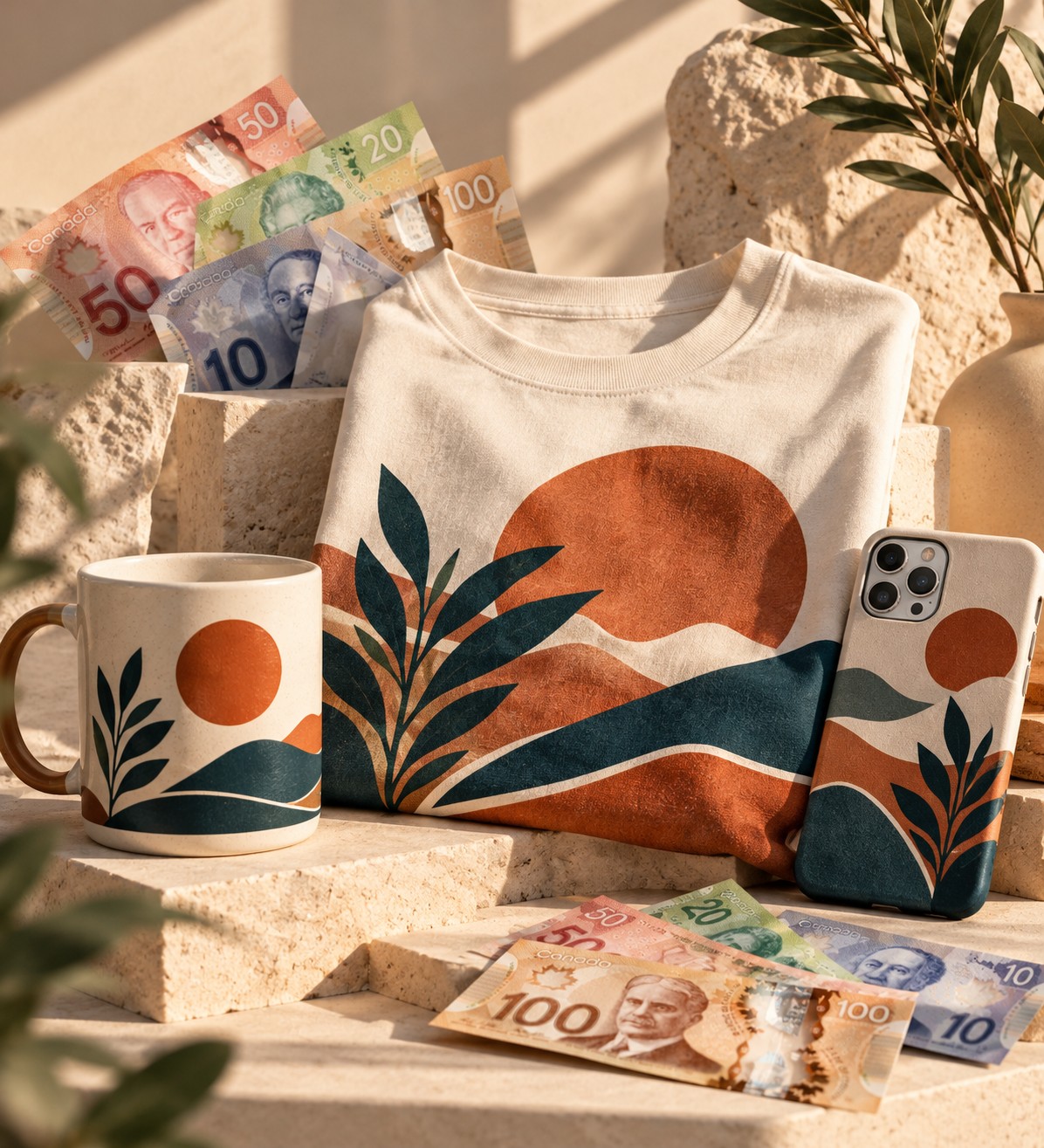
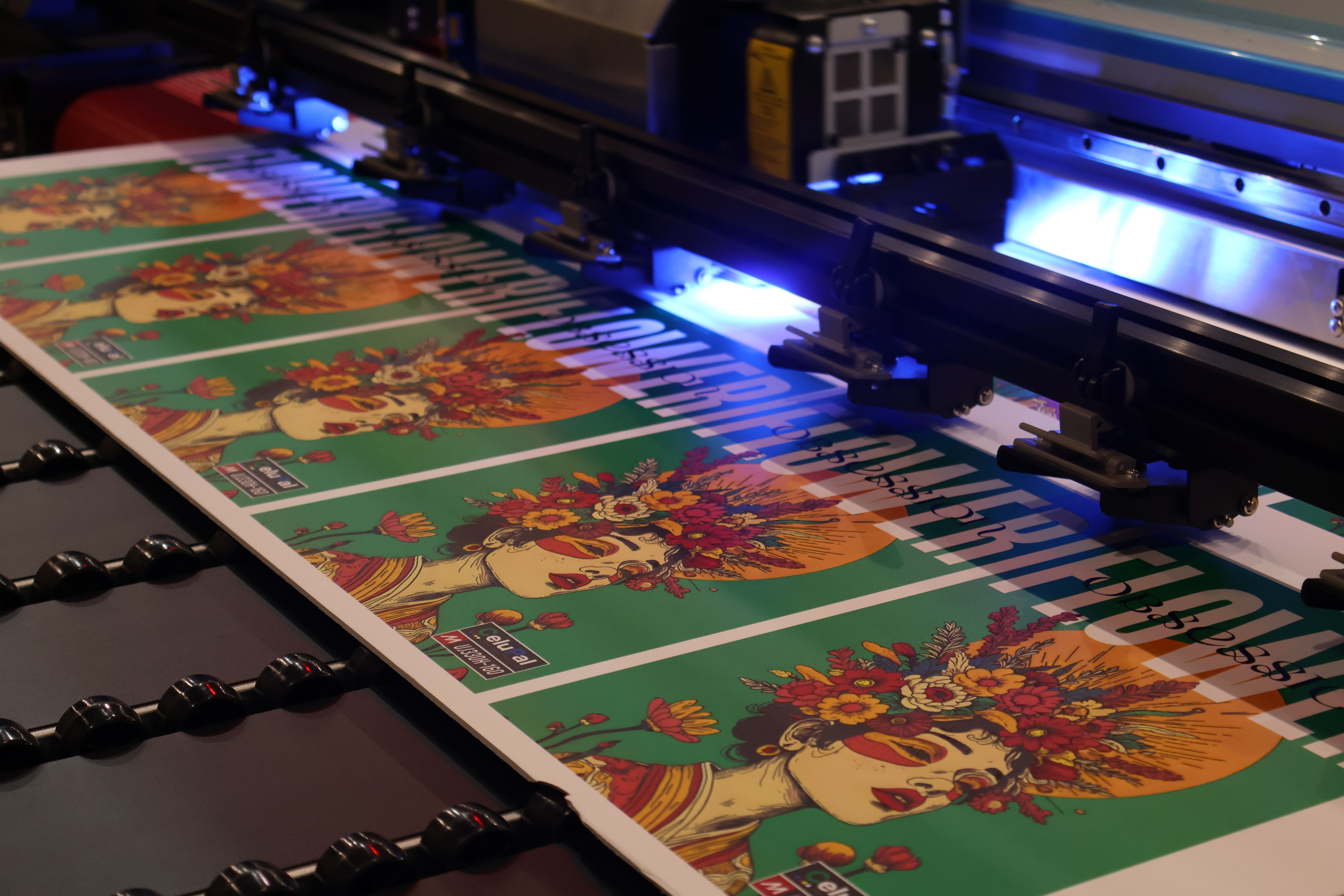
Print on demand (POD) is an online business model where you create designs and sell them on products such as apparel, mugs and home décor, but the printer only makes an item after a customer orders it. You add your artwork to blank items from a supplier's catalogue, and the supplier prints, packs and ships the order for you.
That means no warehouse, no minimum order and no unsold stock gathering dust. It is one of the lowest-risk ways to test a business idea, which is why students, side-hustlers and creators love it.
It can be, but only with realistic expectations. Printify and Printful both suggest aiming for around a 40% profit margin. Printers charge premium per-item rates and there are no bulk discounts, so margins are often thinner than they look. Your business is profitable when your prices cover production, shipping, platform fees and marketing, with something left over.
Is it oversaturated? Easy entry means competition, but continued online shopping growth and the trend toward personalization leave room for sellers with distinctive designs and a clear audience. That is exactly what our course teaches you to build.
Follow this roadmap to go from blank page to your first live product. Each step is covered in detail inside the free eBook.
Strong designs with a clear point of view help you stand out in a crowded market. Start with one idea you can explain in a sentence.
Order physical samples before you launch. Check colour, print placement and fabric, and send revisions to the printer when needed.
Use a professional store theme, clean navigation and original photography such as models or styled scenes to build trust fast.
Write a buyer persona. Tailor your designs, copy and imagery to one specific person rather than "everyone".
Use influencer partnerships, social media ads and pay-per-click campaigns to put your designs in front of the right people.
Add production, platform, shipping and marketing costs, then add your markup. Aim for roughly a 40% margin and compare competitors.
Choose suppliers with fast turnaround, set clear delivery expectations, use tidy packaging and respond quickly to questions.
You do not have to do everything. Pick one or two of these routes, start small and build from there.
Build a branded Shopify store around one focused t-shirt, hoodie or tote line. Owning the storefront means you own the customer list, the pricing and the brand equity.
Best for: long-term brand buildersHobbyists, nurses, hockey coaches, dog owners, gamers: tight communities buy designs that say "this is us". A clear point of view beats a generic slogan every time.
Best for: designers with a clear audienceNames, dates, initials and photo-based products turn a $15 item into a keepsake. Personalization is a major demand driver and lets you charge a premium over off-the-shelf products.
Best for: gift and seasonal sellersMarketplaces bring ready-made shoppers, so you spend less on traffic early on. Printful and Printify both connect to Shopify, Etsy and eBay, so one design can earn on several channels.
Best for: fast first salesShort video drives discovery, and Printify and Printful both integrate with TikTok. Show the product being made, worn or gifted, and let the platform do the heavy lifting.
Best for: content creatorsGlassware, mugs, posters, phone cases and wall art are top POD categories. A wider catalogue raises average order value and gives repeat buyers something new to buy.
Best for: boosting average order valueEmbroidered hats and jackets, neck labels and packaging inserts make your brand feel like a real label, which supports higher prices and better reviews.
Best for: margin-focused sellersPodcasters, streamers and YouTubers want merch without inventory risk. Offer design and store setup as a service, or launch your own creator brand.
Best for: freelancers and agenciesCanada Day, hockey season, back to school and the holidays all create demand spikes. Plan drops weeks ahead, order samples early and promote hard while interest is high.
Best for: agile, trend-aware sellersPrintify is generally cheaper per item with a bigger catalogue. Printful offers consistent in-house quality and more integrations. Many sellers use both, picking the best provider for each product.
Best for: scaling storesThe two biggest names in POD announced a merger in November 2024 but still operate as separate brands. Here is how they compare.
| Printify | Printful | |
|---|---|---|
| Production | Network of 100+ print partners in 12 countries | Own fulfilment centres (5) |
| Catalogue | 1,300+ products | 388 products |
| Quality | Varies by print partner, so test samples | Standardised equipment and inks |
| Premium plan | From $29/month | Growth plan $24.99/month |
| Per-item price | Generally cheaper (e.g. Gildan crewneck from $13) | Slightly higher (e.g. same item from $14) |
| Integrations | 10 platforms | 19 platforms |
| Turnaround | 2 to 7 days | 2 to 5 days |
| Best for | Lower prices and wider choice | Consistent quality and embroidery |
Source: Shopify's Printful vs Printify comparison (April 2025). Prices are in USD and change often; check current pricing before you decide.
The free eBook walks through all 10 methods with examples, tools and the first three actions for each.
A practical, project-based course. You will finish with a live store, tested products and a plan to bring in customers.
Research demand, spot gaps and validate ideas before you design a single product.
Create print-ready artwork with free and low-cost tools, even with zero design background.
Compare Printify and Printful on cost, quality, speed, catalogue and integrations.
Launch on Shopify, Etsy or both: themes, product pages, mockups and checkout.
Calculate true costs, set prices and protect a healthy margin on every order.
Organic social, short video, influencers and paid ads to bring in your first customers.
Handle returns, delays and reviews so happy buyers come back and tell friends.
Double down on bestsellers, add products, build an email list and automate the busywork.
The barrier to entry is deliberately low. If you can browse the web and send an email, you can follow along.
Any modern laptop or desktop is enough for designing, listing and managing orders.
Printify and Printful both have free plans, and Shopify and Etsy let you start small.
The training is self-paced. More time means a faster launch, but consistency matters most.
Plan for a few sample orders, plus store and marketing costs as you grow.
A business or personal bank account and a payment processor such as Shopify Payments or PayPal.
POD rewards sellers who try ideas, read the numbers and keep improving.
Canadian sellers should also look into business registration, GST/HST and income reporting requirements for their province. We point you to the right official resources in the course.
I'm in, send me the eBookEnter your details and we will send the eBook straight to your inbox, plus free access to the course.
We respect your privacy and never sell your information. Unsubscribe any time.
Your free eBook is on its way. Check your inbox (and your spam folder) in the next few minutes.
Download the eBook nowWe couldn't process your request. Please try again.